

Most people think of tree work as a summer job. The weather is nice, the garden is in full swing, and overgrown branches are hard to ignore. But for most trees in Vancouver, summer is one of the less useful times to prune. The best windows fall between late fall and early spring. It’s why most of the tree pruning Vancouver homeowners book with us happens between September and April.
This guide walks through each season, what it’s good for, and where the exceptions are. It also covers the rule that catches most people out: nesting birds.
If you’re new to the topic, our guide to what tree pruning involves is a good place to start.
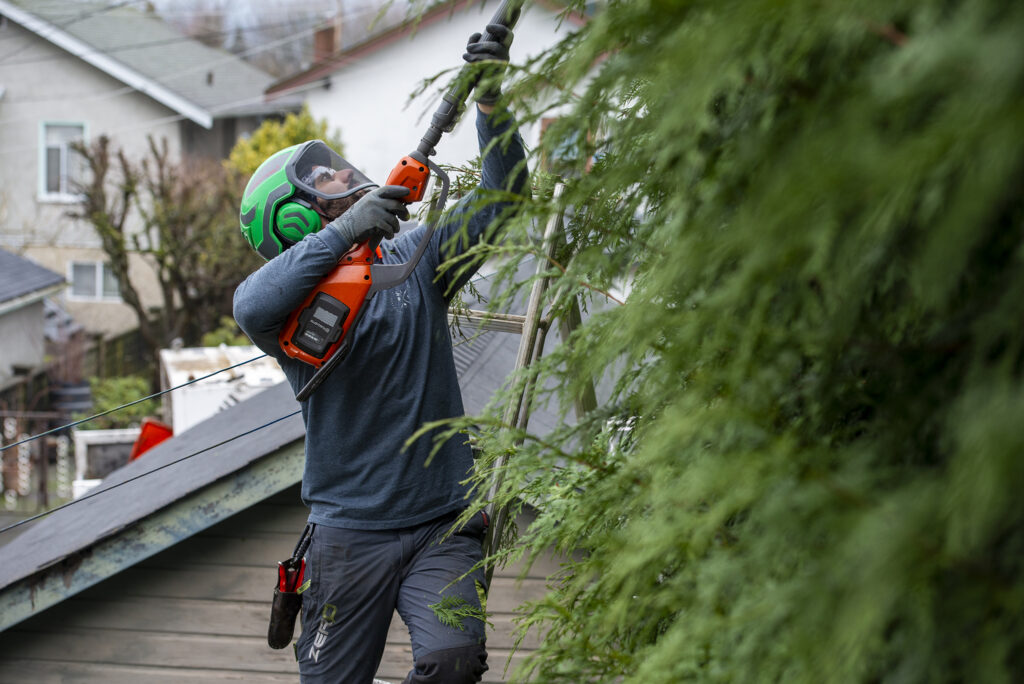
Why Timing Matters
Every pruning cut is a wound the tree has to seal off. How well it does that depends on where the tree is in its yearly cycle. Prune at the right time and the tree puts its energy into closing the wound and growing well. Prune at the wrong time and you can stress the tree, invite disease, or cut away next year’s flowers.
In Vancouver, timing is also shaped by three local factors: a mild, wet winter, a spring and summer nesting season, and fall and winter storms.
Winter (December to February): The Main Pruning Season
For most deciduous trees, late winter is the best time to prune. Once the leaves have dropped, the tree’s structure is easy to see, so it’s much simpler to spot crossing branches, weak unions and deadwood. The tree is dormant, and when growth resumes in spring it can get straight to work sealing off fresh cuts. You can read more about when trees go dormant in Vancouver in our earlier post.
Winter work also falls outside the main bird nesting season, which keeps scheduling simple.
Good for: structural pruning, crown thinning, crown reduction, and dormant pruning of apples and pears.
Spring (March to May): Go Gently
Spring is when trees push out new leaves and shoots, drawing heavily on stored energy. Heavy pruning at this point takes away growth the tree has just paid for, so we generally avoid big cuts until the new growth has hardened off.
Spring is also when bird nesting season begins, which we cover in detail below.
Good for: light shaping of flowering trees once they finish blooming, and removing anything broken or dangerous.
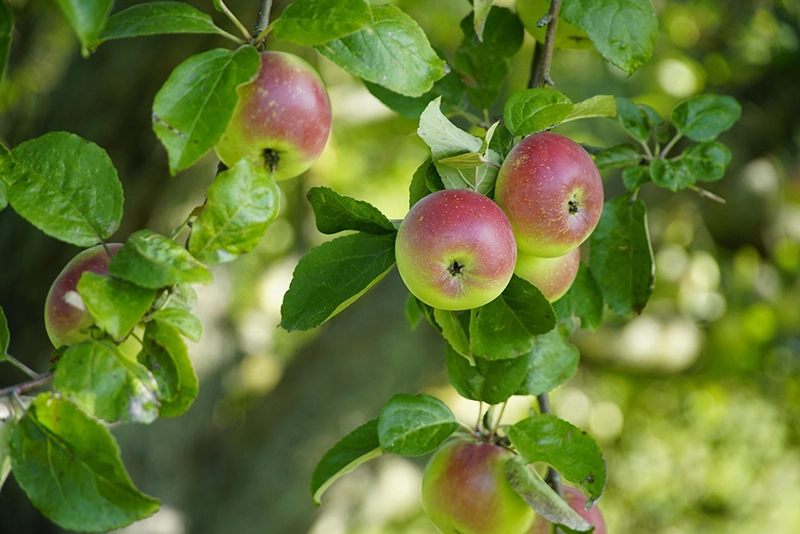
Summer (June to August): The Exceptions Season
Summer isn’t the main pruning season, but it is the right time for a handful of trees:
- Cherries, plums and other stone fruit. These are better pruned in dry summer weather. Bacterial canker spreads in wet conditions, and Vancouver’s wet winters make dormant season cuts riskier for these trees.
- Maples and birches. These bleed sap heavily when cut in late winter and spring. It’s usually not harmful, but pruning once the leaves are fully out avoids the mess.
- Fruit trees that need their growth kept in check. Summer pruning slows vigorous growth, while winter pruning encourages it.
Nesting season is still under way through the summer, so every tree gets checked before work starts. During hot, dry spells we also hold off on heavy pruning, since drought stressed trees cope poorly with losing leaves.
Fall (September to November): Storm Season Prep
Fall is when we shift to getting trees ready for winter. Vancouver’s most damaging weather, from windstorms to atmospheric rivers, tends to arrive in late fall and winter. Rain soaked soil and a full canopy catching the wind is when weak limbs and whole trees fail.
Fall pruning focuses on reducing that risk:
- Removing dead, cracked or hanging branches
- Reducing heavy limbs that extend over roofs, driveways and power lines
- Clearing branches away from buildings before winter
We usually save heavier structural work for the dormant months that follow. If you’re worried about a particular tree, a tree risk assessment before storm season tells you whether it needs attention.
Nesting Birds: The Rule Most People Don’t Know About
Birds and their nests are protected by law in BC. The federal Migratory Birds Convention Act protects most native bird species, their eggs and their nests. The BC Wildlife Act makes it an offence to destroy the nest of any bird while it’s occupied by a bird or egg.
Some nests are protected all year, whether they’re in use or not. Under the Wildlife Act, these include the nests of eagles, ospreys, herons, peregrine falcons, gyrfalcons and burrowing owls. A tree holding one of these nests can’t be worked on without special authorization, even in winter.
The City of Vancouver describes the main nesting season for breeding birds as March to the middle of August. Many local municipalities use March 1 to August 31 in their permit processes, and during those months a nesting survey by a qualified environmental professional may be required before a tree is removed.
Pruning isn’t banned during nesting season. But any work during those months means checking the tree for active nests first, and stopping if one is found. Planning major pruning for the fall and winter avoids the issue almost entirely.
Quick Reference by Season
| Season | Best for | Watch for |
| Winter (Dec to Feb) | Structural pruning of most deciduous trees, apples and pears | Storm damage after windstorms |
| Spring (Mar to May) | Light shaping after flowering | New growth, start of nesting season |
| Summer (Jun to Aug) | Stone fruit, maples, birches, summer fruit pruning | Active nests, drought stress |
| Fall (Sep to Nov) | Deadwood, storm prep, clearance | Heavy structural cuts, best saved for winter |
Plan the Year, Not the Emergency
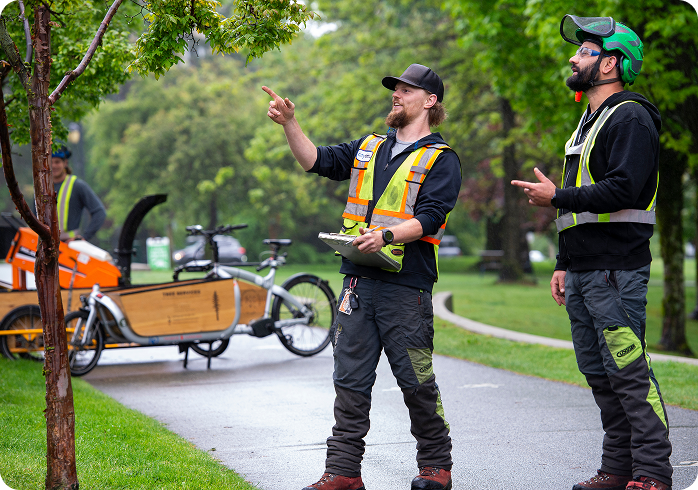
The easiest way to get timing right is to plan ahead instead of reacting to an overgrown tree in July. When we take on tree pruning Vancouver homeowners have been putting off, we start by matching each tree on the property to its best window, and often split the work between winter and summer visits.
Not sure what your trees need, or when? Book an arborist consultation and we’ll assess each tree and set out the right timing.
Frequently Asked Questions
What is the best month to prune trees in Vancouver?
For most deciduous trees, late winter, from February into early March, before the buds break. Stone fruit trees, maples and birches are the main exceptions and are better pruned in summer.
Is it illegal to prune trees during nesting season in BC?
Not automatically. It is illegal to destroy or disturb an active bird nest, and the nests of some species, including eagles, ospreys and herons, are protected all year. Any pruning between March and August should start with a check for active nests.
Can I prune trees in the fall?
Yes, for removing deadwood, reducing storm risk and clearing branches from buildings. Heavier structural pruning is usually better saved for the dormant winter months.
When should I prune fruit trees in Vancouver?
Apples and pears are usually pruned in the dormant season, with optional summer pruning to control growth. Cherries, plums and other stone fruit are better pruned in dry summer weather to reduce the risk of disease.
Do I need a permit to prune a tree?
It depends on where you live. In the District of North Vancouver, pruning a large or protected tree needs a permit and an arborist report (see our North Vancouver page). In Port Moody, pruning done to good practice doesn’t need a permit. In the City of Vancouver, the Protection of Trees By-law covers larger trees, so check before any major work.